

Chris Potter

If you are looking at a career change or just want to take the next step on the ladder, there is a good chance you are looking at your CV and seeing some room for improvement. This can be from wanting to feel out your qualifications or show that you are serious about improving yourself. If this is the case you should consider upskilling and the positive effect on your career.
What is upskilling?
Upskilling means that you are improving on your skillset in regard to your job or your career.
Upskilling can be taken as part of your work push to upskill or be taken on your own as a chance to improve your own career prospects.
Why is upskilling important?
People are looking to upskill all the time; they all do it for a variety of reasons. Some of the most common reasons can be the following:
Promotions
Most people want to have some sort of promotion and enjoy what comes with it, whether it is the money or the feeling of accomplishment.
Payrises
Having more skills can help you get the pay rise you have been asking for; this can come from taking more responsibility or just being able to perform more tasks without the need for help from others.
Job satisfaction
Gaining new skills can help improve your overall job satisfaction, whether it be from that feeling of achievement or taking on a more demanding and varied workload. Having a strong and varied skillset can mean that you are able to do more and achieve more.
Career change
If you are looking for a career change, whether in the same company or at another, upskilling can not only unlock a whole new career path but also allow you to get ahead of others applying for the role.
What skills can you upskill?
Digital
The world is becoming more and more digital, and nearly all businesses consist of some form of digital work. If you can improve your digital skills this can open a new world of possibilities. The specific digital skills you need will depend on your job or your dream role, so it is worth considering before you dive into learning your new skills.
There are many different digital qualifications, but if you are just looking to take the next step up in your career it might just need some informal training from a colleague or a manager.
Leadership
Being a strong a capable leader is a great skill to have, it doesn’t matter if you are looking at progressing to a manager role or if you are looking to lead a small team understanding what makes a good leader and being able to embed those qualities into your everyday work can be a great way to stand out of the crowd and make your dream job role yours.
Soft skills
Soft skills cover a huge range of different skill sets that cover how you interact with those around you, these can cover communication skills, emotional intelligence, teamworking and time management.
It might not seem that skills are as important as other more formal qualifications, but by being able to show you have strong soft skills, you can help set yourself apart from other applicants.
The government has some great information about developing your soft skills, and why they are important for any industry.
Where can you start upskilling?
There are two ways you can upskill: through a structured course such as at college or an evening class or you can take the challenge on yourself by reading up on the skills, using online courses, apps, or online communities.
Upskilling doesn’t have to be a full-time undertaking. There are many options such as:
evening classes
online learning
part-time courses
short courses
When deciding if training is the best option for you career development, you can speak to a government funded advisor. Alternatively, you can seek help locally from
colleges
library
training providers
Jobcentre plus
If you choose to train online there are a number of options depending on your industry or goals. The government offers free online courses for digital upskilling, whilst a number of industry bodies offer specific training for workers in that industry and talking to a manager or someone from the HR department can be the best place to start.
How to fund your upskilling
If you are looking to upskill there can be an worry when you think of funding, but often you do not have to pay upfront or if at all for your upskilling.
Employer funded
If you are employed, it makes financial sense for your employer to encourage you to upskill. Not only does it help them to have a higher skilled employees but it helps show others that there are chances for progression and improvement in the company helping to create a stronger and more loyal workforce.
Government Grants
If you are looking to gain new formal qualifications, you can speak to your college or university to see what government grants and bursaries are available.
If you do not already have an NVQ Level 3 qualification, the National Careers Service offers a number of free courses across the nation to help improve your future career prospects.
Whatever your reason to look at upskilling we will always say to pursue it. Not only do the skills help open more doors for you in a career but we know how it is important it is to show that you are willing to improve yourself. This can be the difference in you getting a job and not.
If you are looking to understand how your skills stack up to those around you or want to know more about landing your dream role, get in contact with a specialist member of our team who will be more than happy to help.
RE announces support for charities in 2024
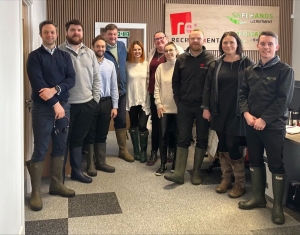
RE announces support for charities in 2024
At RE Recruitment, we are delighted to announce our support for two charities in 2024. As a company, we are passionate about helping local causes and people in need. We love putting on events and taking part in challenges and this year is no different.
The two charities we are supporting are Winston’s Wish and Action Medical Research. We have already taken part in a fun Wear Wellies Day this February and eight members of the team are undergoing rigorous training in preparation for a tri-challenge in June.
For Action Medical Research, we are completing the Race the Sun Challenge in Corfe, Dorset, on Saturday 29th June. We will be cycling 28 miles across a mixture of road, off-road and gravel tracks, hiking 9 miles across coastal footpaths and then canoeing 2 miles to the finish line. Click here to visit our sponsorship page and check out our training updates.
We will be holding events around Cheltenham, Hereford and Worcester to raise money, and we will announce more on our social media pages throughout the year.
UEFA Euro 2024 sweekstake form: download here.
Grand National 2024 sweepstake form: download here.
Cheltenham Gold Cup 2024 sweepstake form: download here.
Sweepstake forms are free to download. If you are able to make a small donation towards our chosen charities via the QR link, we extend our appreciation.

Hospitality jobs are as diverse as the people who fill them. From front-of-house roles like receptionists and servers to back-of-house positions such as chefs and housekeepers, each job plays a crucial part in delivering an exceptional guest experience.
When looking to fill a role, employers are on the lookout for a specific set of qualities in their potential employees, regardless of their position. Here are the top attributes you should cultivate if you’re aiming to excel in hospitality.
Passion for Service
At its core, hospitality is all about service. Employers seek those who genuinely enjoy helping others and are committed to ensuring guests have a pleasant experience. This passion often translates into going above and beyond to meet and exceed guest expectations, making it a non-negotiable quality for anyone looking to thrive in this industry.
Communication Skills
Effective communication is key in hospitality. Whether it’s clearly explaining menu items to a guest or coordinating with team members to ensure smooth operation, the ability to convey information clearly and politely is essential.
Employers value candidates who can communicate effectively with guests of diverse backgrounds and with colleagues across different departments.
Flexibility and Adaptability
The hospitality industry is fast-paced and ever-changing. Employers appreciate candidates who can quickly adapt to new situations. This doesn’t mean just being able to cover a shift at the last minute, it is about being able to adapt to a changing situation, or working in an area where you usually wouldn’t.
This flexibility helps businesses maintain high service standards even under pressure.
Attention to Detail
Small details can make a big difference in the guest experience. Whether it’s noticing a guest’s preference for extra pillows or ensuring a special meal request is accurately communicated to the kitchen, attention to detail is a quality highly valued by employers.
It demonstrates a commitment to excellence and can significantly enhance guest satisfaction.
Teamwork
Hospitality is a team sport. From the front desk to the kitchen, it requires cooperation to deliver quality service. Employers look for candidates who can work well within a team, respecting their colleagues and work with others towards a positive working environment.
Good teamwork skills include the ability to listen, contribute, and compromise when necessary.
Problem-solving
No matter how well things are planned, unexpected issues can arise in hospitality. Employers need staff who can think on their feet and come up with effective solutions to problems.
This might involve dealing with a dissatisfied guest or resolving a logistical challenge. A calm, creative approach to problem-solving is highly sought after in potential employees.
Professionalism
A professional attitude and appearance are crucial in hospitality. Employers expect their staff to act respectfully and maintain a high level of personal grooming.
Professionalism also includes reliability, punctuality, and the willingness to uphold the company’s standards and values.
Constant improvment
The best hospitality professionals are those who are committed to continuous learning and improvement. Whether it’s mastering a new software system, learning about the latest culinary trends, or understanding how to enhance guest experiences, employers value individuals who are eager to grow their skills and knowledge.
Embarking on a career in hospitality offers a world of opportunities to engage with diverse people, grow professionally, and make a real difference in guests’ experiences. If you feel that hospitality is the right industry for you and you want to find your first job, or whether you want to make the next step up in your career ReRecruitment is here to help. You can check out our hospitality job board to find our latest roles or email us, and a specialist member of our team will get back to you to discuss how we can help.
How to interview candidates remotely

The way companies conduct job interviews has transformed dramatically in recent years, with the rise of remote work and the use of technology to facilitate hiring processes. Remote interviews have become the new norm, offering benefits for both employers and candidates.
The benefits of interviewing candidates remotely
One of the most obvious benefits in conducting remote interviews is the potential to open up job opportunities beyond geographic boundaries. It allows employers to tap into a global talent pool and candidates to explore positions that are further afield.
Interviewing candidates remotely also helps to cut down the time employers spend on the recruitment process.Whether it’s an initial interview or a final stage interview, remote interviews can help an employer to instantly see if a person might be a good fit for the company or not.
But for the process to be truly beneficial, remote interviews need to be conducted in the right way. Here are our tips on how to interview candidates remotely so you can quickly and conveniently find the right candidate to fill your vacancy.
How to interview candidates remotely
1. Prepare and Test Your Technology
Before the interview, ensure your technology is up to the task. This includes having a stable internet connection, a reliable video conferencing platform, and any relevant interview software.
Conduct a test run with a colleague to check for audio and video quality. Familiarise yourself with the platform’s features to prevent any technical hiccups during the interview.
2. Establish a Professional Environment
Just as you would expect the candidate to have a quiet and professional setting, make sure you do too. Ensure the room is clutter-free and well-lit, free from other employees and distractions.
Choose a neutral or professional background. You are representing your company’s brand and your interview set-up should reflect this.
3. Set Clear Expectations
Clearly communicate the format of the interview in advance. Inform the candidate about the technology you’ll be using, the duration of the interview, and any additional assessments or tasks.
Provide a schedule so candidates know what to expect, and allocate time for their questions.
4. Prepare Questions and Assessment Criteria
Develop a structured list of questions that are relevant to the role and company culture. Ensure these questions assess both technical and soft skills.
Create a set of criteria to evaluate candidates consistently. This will help you compare candidates objectively and make more informed decisions.
5. Use Video to Your Advantage
Video interviews allow you to gauge a candidate’s body language, expressions, and non-verbal cues. While not perfect, it does give you some insight into their demeanour and character.
Try to maintain some eye contact by looking at the camera rather than the candidate’s video feed. This creates a more engaging and personable interview experience.
6. Engage and Build Rapport
Remote interviews can sometimes feel a bit daunting and impersonal. To counter this, start the interview with a warm greeting and a brief introduction of yourself, the company and the job role to make the candidate feel comfortable.
Listen actively, show empathy, and be responsive to the candidate’s cues. Building rapport is crucial for an effective interview and even though you may need to work harder, it is still possible to build rapport remotely.
7. Establish good online interview etiquette
When conducting face-to-face interviews, it is normal for the conversation to flow two or more ways, as people interject and bounce ideas off each other. In a remote interview, these interjections can feel like interruptions, so you will need to use other techniques to keep the conversation flowing.
Ask questions to ascertain whether a candidate has finished what they need to say, and avoid interrupting candidates as they are speaking.
8. Discuss the follow-up procedure
After the interview, let the candidate know the next steps. Give them an idea about when they are likely to hear from you and whether they need to send in any more documentation to support their application.
If it’s appropriate, you could also offer feedback on the interview. Whether you expect to hire them or not, constructive criticism shows professionalism and respect for their efforts.
Need more help on how to interview candidates remotely?
Conducting a candidate interview remotely is becoming a normal part of the recruitment process and we are seeing a lot more of it happening at RE Recruitment. However, a remote interview is not the same as a face-to-face interview. If you follow these tips then you’ll get the most out of your remote interview and potentially recruit some talented candidates into your company. You can discover more Video Interviewing Best Practice for Client techniques in our blog or speak to one of our recruiters for more help and advice.

Working in hospitality provides you with lots of transferable skills that you can take forward to the next steps in your career.
But what are they and how can you apply them to a new job or sector? We have 5 key skills that you are bound to have in abundance after a career in hospitality.
1. How customer service can help your career
At its core, the hospitality industry is all about providing people with top-quality service. Whether you are providing a fine dining experience or cleaning rooms in a hotel, you are working towards the customer’s experience.
You may see your role as mundane. However, for a recruiter, they see someone with resilience, tenacity, and the ability to work in a fast-paced environment.
The buzz of the busy restaurant or the hustle of the hotel lobby is where you nurture your set of skills. From keeping cool in the kitchen’s heat to deftly managing a displeased guest, problem-solving becomes second nature.
2. The advantages of being an effective communicator
Communication skills are the bread and butter for any hospitality employee. You must clearly relay information to customers, coordinate your team, and sometimes even pacify tense situations.
The ability to truly listen and understand a customer’s issues shows signs of high emotional intelligence. Emotional intelligence is said to be one of the most important skills as we move into a more digital world.
3. Bringing a fine attention to detail
Whether it is a guest’s allergens or how they like their room prepared, attention to detail is important in every aspect of hospitality. Not only can the details mean the difference to a customer’s experience but also their safety.
The same attention to detail that is important in hospitality can also be beneficial in other areas. For example, when working on a contract, it is important to carefully review it for errors, such as spelling or missing information. Similarly, if you are working in manufacturing, it is important to ensure that the quality of the products is high and that they meet all safety standards.
A strong attention to detail can make you a dependable member of staff, whatever career you work in.
4. The ability to problem solve under pressure
Anyone who has worked in hospitality understands how important creative problem-solving is. This soft skill, trained by working with customers in demanding situations, can set you apart from those with more experience.
Whether you are a restaurant manager dealing with supply issues or a receptionist out-booking tired and angry guests. The ability to think on your feet and make clean conscious choices under pressure can help set you apart from any other candidate.
Changing your career
The foundation you have from your experience not only sets you up for an amazing career, but gives you the ability to be a better person. The biggest issue some people find when changing their career sector is their lack of experience in their desired sector. Finding temporary work is a great way to get over a lack of experience, and our temporary job listings make finding your job search easier.
Remember how amazing hospitality can be?
If reading this article has reminded you how amazing hospitality can be, check out our latest hospitality jobs here.
Whatever you choose as your next step on your career path, RE Recruitment has a team of experienced recruiters to help. Have any questions or need advice on what to do next? A specialist recruiter will be happy to help, call us on 01242 505 400 Or Email us at hello@rerecruitment.com.

In an evolving landscape of post-Brexit immigration rules, EU Settlement Scheme (EUSS) changes are noteworthy for EU workers and their employers. Understanding these changes is crucial to ensure you are compliant and avoid any hefty penalties.
Historically, EU workers without a rightful status under the EUSS could apply to EUSS and obtain a Certificate of Application (CoA) which gave them a statutory excuse for 6 months when checked through the Employer Checking Service. When the application was refused, or when the 6 months run out, applicants were able to make another application and continue working in the UK, however this changed from August 2023.
Key Changes Effective from August 9th, 2023
As of the 9th of August, 2023, the process has undergone significant changes. Late applicants need to demonstrate that they have “reasonable grounds” for their application delay before they can be issued a Certificate of Application.
The Home Office will conduct a thorough assessment to ascertain the validity of the application. This involves:
Verifying the applicant’s identity and biometrics.
Ensuring the entitlement to apply from outside the UK (where relevant).
Investigating the legality of entry into the UK, especially if joining a family member.
Evaluating the reasons for the delay in applying.
If the information provided is correct and the “reasonable grounds” are approved, a Certificate of Application will be issued. This together with a Positive Verification Notice from the Employer Checking Services will provide a time-limited statutory excuse lasting for six months.
Successful applicants will then receive a decision letter via email or post confirming their attainment of settled or pre-settled status.
Who Can Still Apply?
While the deadline for the majority to apply to the EUSS was on 30 June 2021, there are exceptions:
Family members of someone from the EU, Switzerland, Norway, Iceland, or Liechtenstein who had been residing in the UK by 31 December 2020 and have either settled or pre-settled status. This applies to those joining their family in the UK post 1 April 2021.
Children born or adopted in the UK after 1 April 2021.
Non-EU family members of eligible individuals from Northern Ireland.
Those exempt from immigration control or who ceased to be exempt post 30 June 2021.
Individuals with limited UK entry or stay permissions, such as work or study visas, that expire after 30 June 2021.
Grounds for Late Applications
Various reasons are accepted as “reasonable grounds” for missing the 30 June 2021 deadline. Some of these include:
Overlooked applications for minors by their guardians.
Medical condition, which prevent them from applying.
Lack of physical or mental capacity to apply.
Ongoing care or support needs.
Victims of modern slavery or abusive relationships.
Limited internet access or access to necessary documents.
Unawareness about the EUSS despite eligibility.
Lost permanent residence status post 30 June 2021. Had permanent residence status or a residence document that stopped being valid after 30 June 2021, and did not know you needed to apply to the scheme
Challenges accessing support due to COVID-19 restrictions.
Any other compelling, practical, or compassionate reason.
Automatic extension for pre-settled status
From September 2023, those with pre-settled status will receive an automatic 2-year extension, before it expires, if they have not obtained settled status. This will ensure that nobody loses their immigration status if they do not apply to switch from pre-settled to settled status.
What about employees who were hired before July 2021?
Employers are not required to make retrospective right-to-work checks on EEA national or family member employees who joined before 1 July 2021. If it comes to light that the person needs to apply for EUSS, the employer can ask them to apply within 28 days. If they do not apply within the 28-day time frame, the employer is expected to terminate their contract.
What happens if you employ someone illegally?
If is the employer’s responsibility to ensure that any potential employee has been granted settled status, pre-settled status or a certificate of application. Failure to check for any of them can put you at risk of non-compliance and mean you face a fine of up to £20,000 per worker. This figure is set to escalate to a staggering £60,000 per worker in the coming year.
As an employer, you are able to utilise the Home Office tool called the Employer Checking Service to assess workers eligibility to work if the status it not yet established or if you are not able to obtain enough evidence for the statutory excuse to be granted.
How RE can help
As healthcare employment specialists, we have the understanding and knowledge to help make sure you and your employees are compliant. We vet all candidates and check their settled status so you can be confident in your next hire. For any more information or to find out how we can help, call us on 01242 505 400 or email us at hello@rerecruitment.com, and a specialist team member will be more than happy to help.

The hospitality sector has had a rollercoaster ride over the last few years. From shortages in seasonal staff due to Brexit, through two years of Covid, to the current cost of living crisis, it’s been a topsy-turvy time for anyone in hospitality. Thankfully, signs of recovery are promising but vacancy signs still adorn many restaurant windows.
In fact, according to gov.uk, vacancies in hospitality were 72% higher for the three-month period Nov-Jan 2023 when compared to the immediate pre-pandemic period of Jan-March 2020. So why is it still so difficult to recruit staff into the hospitality sector? In this blog we’ll explore this in more depth and look at the challenges in hospitality recruitment and some possible solutions.
What are the Challenges and Solutions in Hospitality Recruitment?
1. Hiring and retaining staff
Challenge: hospitality is all about the people. Whether it’s customer-facing or behind the scenes, people are what make the difference in hospitality. And yet one of the biggest challenges facing the hospitality sector is hiring staff. More specifically, hiring the right staff and, crucially, then retaining them.
Solution: it is important for hospitality establishments to make sure they are recruiting in the right places to attract the right people. That means posting on jobs boards, via social media, in industry publications and through dedicated hospitality recruitment agencies, such as RE Recruitment.
2. Labour leakage
Challenge: even though the hospitality sector is seeing some recovery, a shortage of staff is still a major problem. Since Brexit and Covid, it has been reported that over 300,000 staff have left their jobs and returned to their home countries. This has led to a shortage in hospitality staff, especially at peak seasons.
Solution: there needs to be more emphasis on developing home-grown talent. That means educating school leavers and job seekers and convincing them that hospitality is a viable career option for them. It also means offering good training and development programmes for existing staff so that their talents can be built upon for the future.
3. Skills shortage
Challenge: hospitality jobs are varied and so require staff with a variety of different skills and experience. But, whether it’s kitchen portering, front of house receptionist or head chef, the skills need to match the role. Many establishments are suffering as they are recruiting staff who simply don’t have the necessary skills to work in hospitality. While some roles can be classified as unskilled, there are still certain soft skills which are necessary, such as good communication, listening, organisation, reliability and being able to take the initiative.
Solution: using a specialist hospitality recruitment agency to hire staff will ensure you employ people with the right skills. RE Recruitment has built up a pool of talented employees who work within the hospitality sector. We always thoroughly vet our candidates so we can guarantee that any potential employees we put forward will have the relevant skills required for the role.
4. Lack of benefits
Challenge: many jobs in the hospitality sector are low-paid, irregular and unreliable. Zero contract hours, lack of benefits such as sick pay and holiday allowance and unsociable hours, are all barriers that can prevent the right type of people applying for roles.
Solution: when advertising for hospitality roles it is important to highlight the key benefits of the role and what makes your establishment and offering stand out compared to others. Incentives such as higher wages, tip-sharing, free staff meals and discounts are all incentives that could help to attract the right candidate. At RE Recruitment we can advise on the best way to advertise your hospitality role to ensure a high calibre of staff.
5. Poor perception
Challenge: hospitality work is often seen as casual work that is used as a stop-gap or for a little extra money on the side, before taking on something more permanent. For this reason, the hospitality industry often suffers with staff retention and fails to attract staff who are motivated to develop skills and progress in their career.
Solution: more needs to be done to highlight how rewarding a career in hospitality can be and what the potential benefits could be. Each business needs to point out their unique offerings, any training opportunities or pathways to career development.
Need help with your hospitality recruitment?
As a specialist hospitality recruitment agency, RE Recruitment delivers talented hospitality and catering professionals to some of the region’s most prestigious industry names.
Over the last two decades, we’ve established, retained and built a vast network of skilled and passionate hospitality professionals, enabling us to supply a reliable, comprehensive service to our clients. If you’d like to find out more, please speak to one of our hospitality recruitment advisers.
The Importance of Soft Skills in Office Jobs

Working in an office requires a number of skills. These include tangible skills, such as computer literacy, accounting and technical skills, but intangible qualities, known as soft skills, are arguably just as important. In this blog, we’ll take a look at the different types of soft skills and their relevance to an office job.
What are soft skills?
Soft skills are the sort of personal qualities that most of us have in our toolkit to help us perform well in everyday situations. They encompass a range of people, social and communication skills that can help to foster a positive work environment and enhance collaboration with colleagues. And they can make a real difference to a person’s success at work. Here are 8 of the most important soft skills that you can have in an office job.
8 Soft Skills for an Office Job
1. Effective communication
Perhaps the most important soft skill for an office job is communication. Being able to communicate well, either verbally or using the written word, can contribute to a positive work environment. Good, clear communication is also vital when working with clients and customers to portray a positive image of your company.
2. Teamwork & Collaboration
When you work in a team it is important to be able to listen to colleagues and to adapt to different ways of thinking and doing things. Offices are becoming increasingly collaborative environments, so soft skills such as being able to integrate into a team, understand diverse perspectives and work together effectively, are important.
3. Adaptability & Flexibility
Offices are becoming increasingly agile work environments where employees are expected to be able to pivot when needed. Employers will want to know that that you are able to adapt to change and that you can be flexible with the tasks you are expected to undertake. Showing resilience in the face of challenge by being adaptable and flexible are soft skills that are seen as essential in an office workspace.
4. Problem-solving & Critical Thinking
Employees who can approach challenges with a solutions-oriented mindset are valuable to any company. Likewise, if you are able to analyse situations clearly and make informed decisions to work towards solutions. These sort of soft skills show that you can overcome day to day obstacles and work towards long-term strategies.
5. Time Management & Organisation
It goes without saying that to work in an office environment, it helps to be organised. This means being able to work to deadlines by prioritising tasks and managing your time efficiently. This is especially important in office environments, such as client agencies, where you will be expected to multi-task and juggle several responsibilities.
6. Client & Customer Interaction
Working in an office, it is likely that you will need to speak to clients or customers at some point. Even if your main role is not customer or client-facing, you may be required to speak to someone on the phone or via email. Soft skills such as good communication, active listening and relationship-building play a crucial role in ensuring positive interactions and can help to enhance the reputation of your company.
7. Leadership & Emotional Intelligence
You don’t have to be in a managerial position to show good leadership qualities. Being a leader is about how you positively influence and inspire the people around you. Soft skills in emotional intelligence will enable you to build strong relationships, understand and manage emotions effectively, and inspire confidence in others. Leaders with high emotional intelligence can navigate conflicts, motivate their teams and foster a positive work culture.
8. Creativity & Originality
Being creative doesn’t just mean being able to draw pretty pictures. It means being able to think in an original way thus bringing fresh ideas to the table. An effective office team is made up of people who have different ideas and opinions but who can collaborate to find a successful solution. Having soft skills in creative thinking and originality are vital to keep a company moving forwards.
How to highlight soft skills on a CV
These are just a handful of the soft skills that are important in an office environment. Chances are that you already possess a lot of these soft skills, and if so, don’t forget to shout about them on your CV and job applications. Cite examples of when you’ve used soft skills to make a difference to your company. If you need help identifying your soft skills do talk to one of our recruitment professionals. And if you need help writing your CV, take a look at our blog on How to Write the Perfect CV.

If you’re thinking about a career change into the Insurance sector, it’s important to demonstrate your transferable skills in the interview.
Our Insurance Recruitment Specialist, Laurence Cooper, gives 10 top interview questions to prepare for beforehand. Check out his blog on the insurance sector here for more useful information.
Can you explain your understanding of the insurance industry and its various sectors?
How do you stay updated on changes in industry trends in your current sector?
What motivated you to pursue a career in insurance?
Can you provide an example of a challenging insurance claim/ customer service issue you’ve handled in the past and how you resolved it?
How do you handle customer objections or difficult situations when selling insurance policies?
What strategies do you employ to ensure accuracy and attention to detail in your work?
How do you stay organised when managing multiple responsibilities simultaneously?
Can you discuss a time when you had to collaborate with colleagues from different departments or teams to achieve a common goal?
How do you handle stress or pressure in a fast-paced environment?
What do you know about the company?
To speak to Laurence about current opportunities and support with interview questions, please call 01242 505400 or email laurencec@rerecruitment.com
How Remote Work is Changing Administrative Jobs

In the last few years, there has been a monumental shift in the way we work. Ever since the ’90s, people have been striving to achieve a better work-life balance and Covid has sped up that process. With no other option but to implement remote working solutions, business owners quickly gave staff the option to work from home.
Today, even though many people are coming back to the office, there is still a huge majority of employees who work from home or who do a bit of both by following the hybrid working model. But in order to make this viable for the future, there has to be changes in the way we do things. So, in this blog we’ll explore how remote working is changing the nature of administrative jobs.
How is Remote Work Changing Administrative Jobs?
The integration of technology and the rise of virtual collaboration tools have reshaped the way we perform administrative tasks. These technologies have been designed to make administrative tasks smoother, swifter and more efficient. They also, importantly, make it possible for administrative tasks to be performed remotely. Here’s how remote working has changed administrative jobs.
Daily Tasks Have Gone Online
Gone are the days of catching up around the office water cooler. Now employees are checking in with each other via real-time messaging tools such as Slack or Microsoft Teams. Routine tasks such as scheduling, document management and communication have moved seamlessly over to the virtual realm, with the added bonus that documents, calendars and workflow schedules can all be viewed and commented on by members of your team. These shifts mean you can keep on top of administrative duties wherever you are in the world.
Emphasis on Digital Literacy skills
With so much happening in the virtual space, there has been a corresponding demand for administrative employees to have good digital literacy skills. Proficiency in collaboration tools, project management software, and virtual communication platforms is now a prerequisite. And there needs to be a willingness to keep learning as new technologies are being developed all the time.
A Flexible Working Day
Perhaps one of the greatest ways that remote working is changing administrative tasks is by shaking up the working day. Gone is the old fashioned 9-5 diktat; instead employers are increasingly allowing a more flexible approach, based on individual productivity peaks rather than a fixed timetable.
Location Has Become Irrelevant
Another major change that remote working has brought to administrative roles is that the role is not bound by geographical limitations. That means employees can work from anywhere in the world, allowing them to choose a role and company that matches their skills and values. It also means that employers have access to a much wider talent pool as they can recruit the right candidate from a global network.
Tighter Security and Confidentiality
While there are many positives that have come with performing administrative roles remotely, one of the challenges is the increased risk of data breaches. Managing sensitive information becomes more complex when communication channels are digital, requiring a heightened awareness of cybersecurity practices to safeguard data and uphold privacy standards.
Increased Training and Upskilling Opportunities
Working remotely undoubtedly requires a certain level of computer literacy, but companies don’t expect you to know it all. Especially when new software programmes are constantly in development. To help administrative staff keep up with new technologies, companies are offering training and development programmes on administrative software such as project management, cyber security and virtual collaboration tools.
Enhanced Employee Wellbeing
Remote working has given employees a new sense of control and independence over their working life. Where once administrative staff were office-bound and suffered from presenteeism, now their work is more results-driven. This allows individuals to have some autonomy over their schedule, to create work environments tailored to their preferences, contributing to increased job satisfaction and overall engagement.
There is no doubt that it is an exciting time to be in the workplace. Remote working has brought with it cultural changes that benefit both administrative employees and their employers. The key to enjoying a successful career in administration is to embrace these changes and to continue to adapt and develop as new administrative technologies are introduced. If you are looking for a new administrative role, either remote or office-based, take a look at our real-time job search page. And if you are keen to improve your virtual administrative skills, talk to one of our recruitment consultants who can help you find programmes to suit you.